Knowledge Sharing & Public Learning
Cantiere Circolare.
educational programme for teachers — Turin, Italy
Teacher training on circular economy and creative reuse — early childhood education.
Cantiere Circolare is a training programme for nursery school teachers, designed to promote awareness, skills and practical tools related to creative reuse and the circular economy in educational contexts.
The project was developed at Centro Remida Turin, as part of Crescere in Città — the City of Turin programme managed by ITER – Istituzione Torinese per una Educazione Responsabile — with the support of Green Growth Generation.
The programme engaged 18 teachers across three hands-on workshops of 3 hours each, with the aim of:
– Supporting educational communities in reducing everyday waste
– Introducing concrete practices of sustainability into school routines
– Valuing creative reuse as a pedagogical approach
– Fostering the exchange of good practices among teachers from different schools
The programme — three hands-on workshops
Workshop 1
Everyday reuse: practices that make a difference
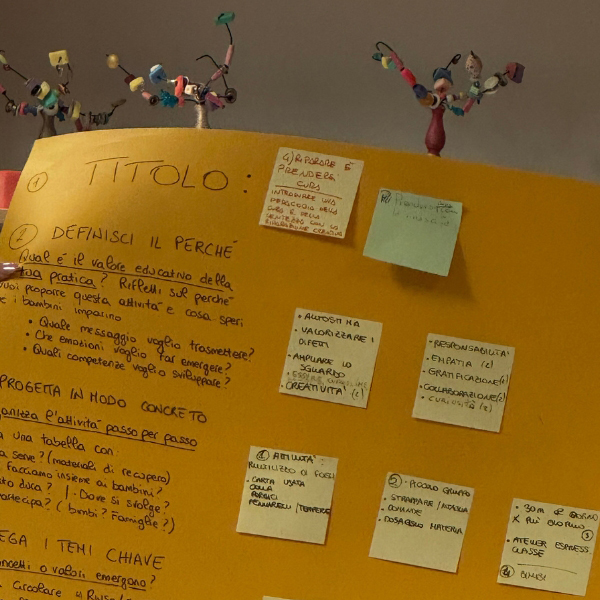
The first workshop introduced the concepts of circular economy and sustainability, with particular attention to the role of reuse in educational contexts. Teachers worked in small groups to reflect on waste in school settings and identify practices already active in their classrooms.
From this work emerged the Map of Sustainable Practices — a shared educational tool collecting observations, insights and operational ideas to bring back into the classroom.
Key themes: the value of the “imperfect” object, the educational potential of mistakes, the importance of embedding reuse in daily routines, and the decisive role of families in supporting a shared culture of sustainability.
Workshop 2
The lifecycle of objects: from production to disposal
The second workshop explored the lifecycle of objects — from the origin of raw materials to production, transport, disposal and the possibilities of transformation and reuse.
Teachers developed four replicable educational practices, designed to translate the circular economy into everyday gestures accessible to young children:
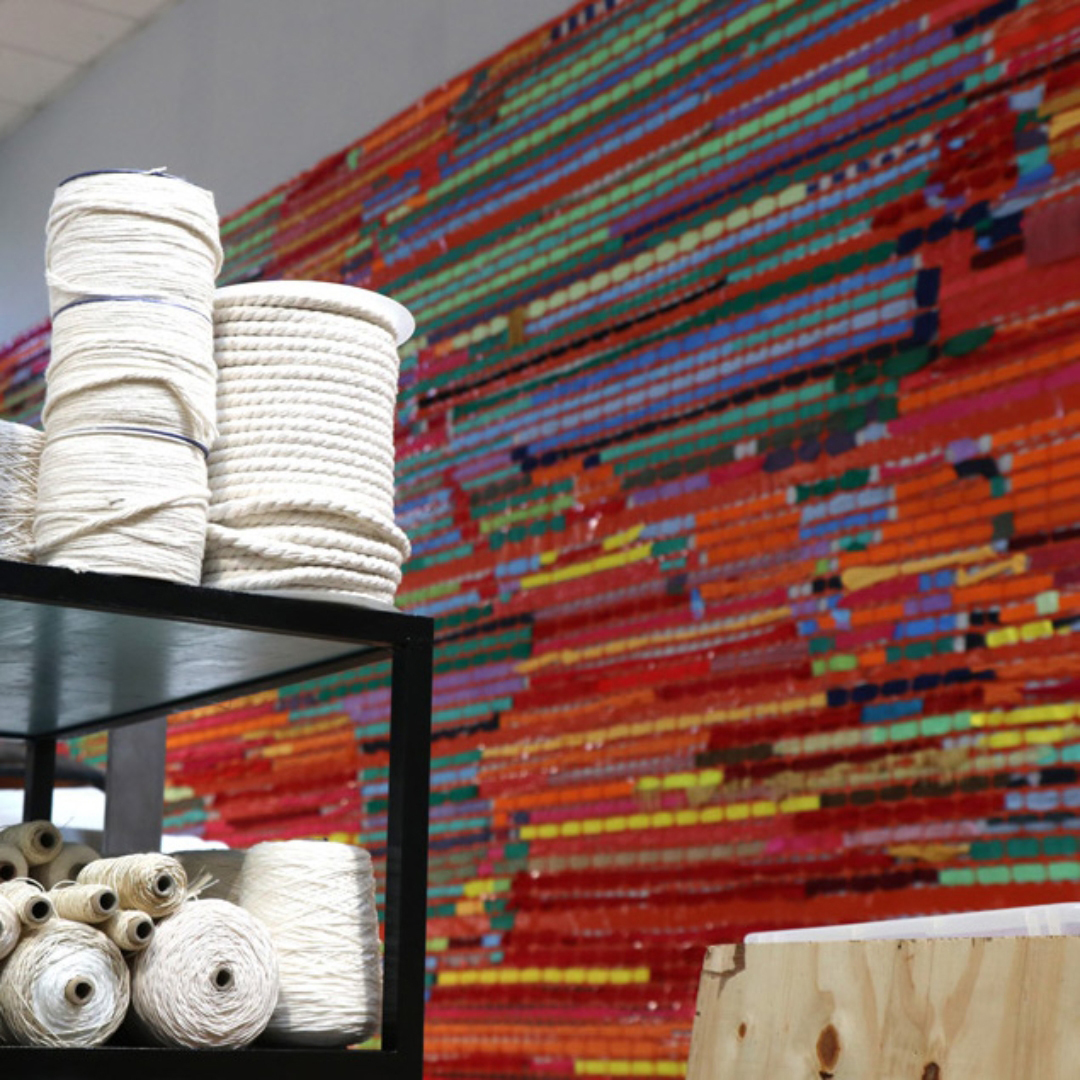
The recovery materials corner — a dedicated space for free exploration of fabrics, small boxes, buttons, sticks and discarded materials, developing logical thinking, creativity, autonomy and fine motor skills, while encouraging family involvement in material collection.
The good exchange — each child brings an object they care about, makes it available to classmates, and takes it home after a period of sharing. A practice for working on emotions, trust, generosity and responsibility.
Repairing is caring — children tear, glue, reassemble and reinvent objects using used paper and simple materials, learning to see waste as a starting point and developing care, patience and expressive capacity.
Measuring waste — children observe, weigh and compare leftover food, developing awareness of the food lifecycle and collective responsibility for waste reduction.
Workshop 3
Explore, share, imagine
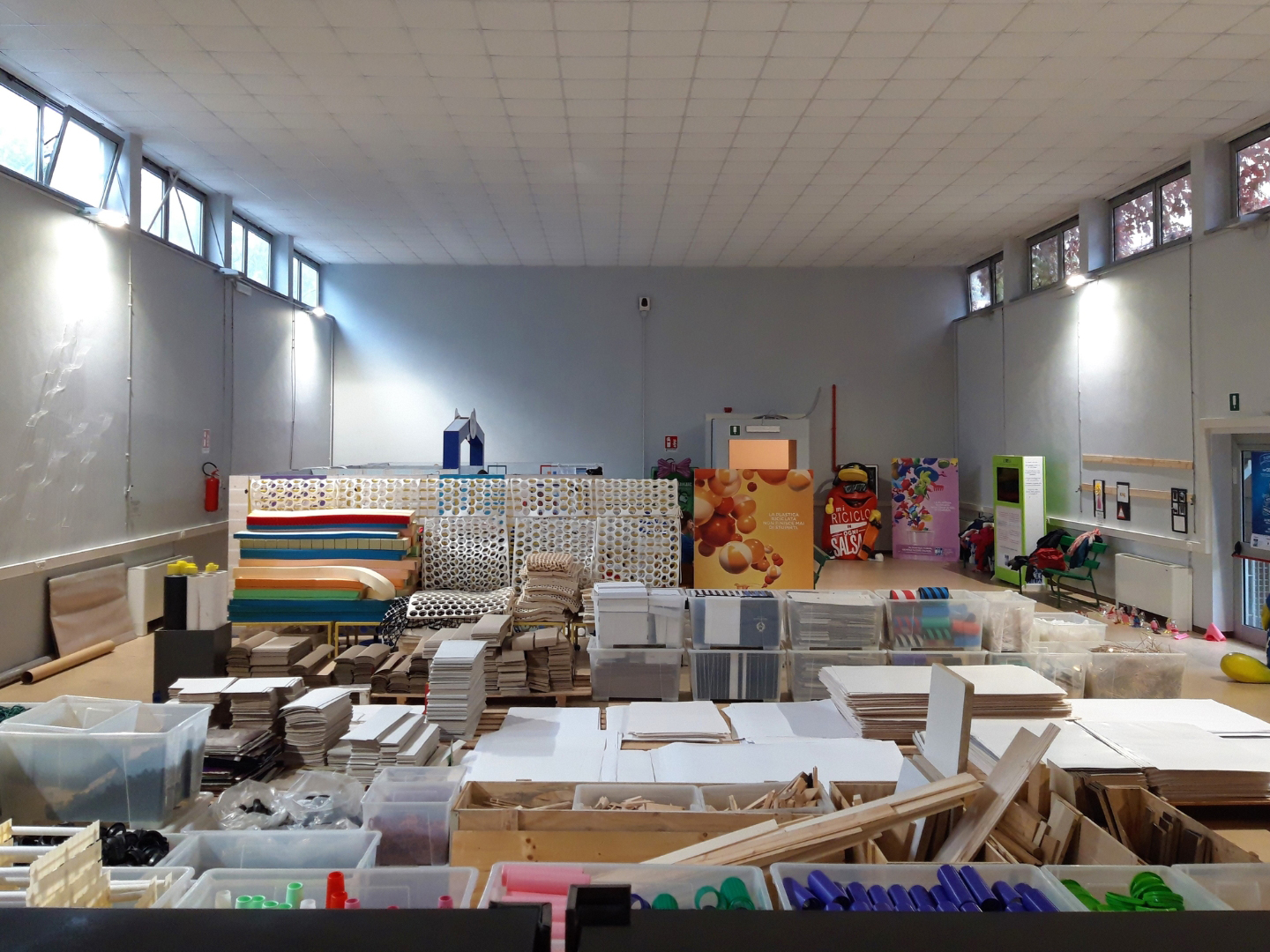
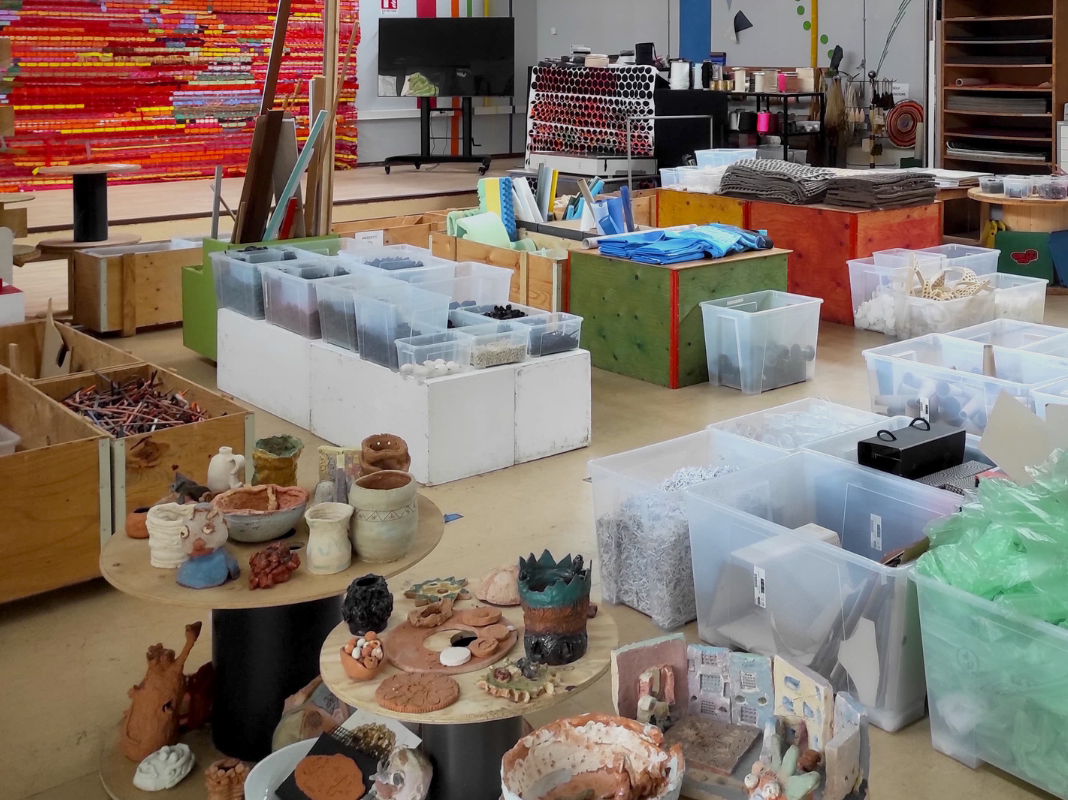
The third workshop was a moment of restitution and discovery. ITER and Remida guided the group through the philosophy of the creative reuse centre, sharing how their programmes are developed and why material recovery can become a powerful educational driver.
Teachers explored the centre’s spaces, discovered the materials warehouse, and participated in a final collective reflection, closed by a Mentimeter feedback session and a group photograph.
Results — what teachers say
The programme received strong positive feedback on the practical nature of the proposed tools: simple, sustainable and immediately applicable in everyday school life.
The most recurring words in participants’ responses: sharing, new practices, new perspectives, rethinking waste, designing with creativity.
Most appreciated practices for impact and replicability:
- The good exchange
- Repairing is caring
- The recovery materials corner
- Measuring waste
Many teachers requested the continuation of the programme as a “permanent laboratory” — an ongoing space for exchanging ideas, good practices and new projects related to circular economy and creative reuse in education.
Cantiere Circolare as a replicable model
Cantiere Circolare has demonstrated how sustainability can become a natural part of school life — not as an add-on activity, but as a way of observing, choosing and acting in everyday practice.
The programme showed how ready nursery schools are to embrace a more circular vision: starting from the value attributed to objects, the care for what already exists, the attention to waste, and the collaboration between adults and children.
The model — three hands-on workshops, a community of practice among teachers, tools replicable in the classroom — represents a transferable approach applicable to other educational and territorial contexts.
Projects.
Projects are the core of our work. Through place-based urban projects, we integrate participation, research, and experimentation in real city contexts.